

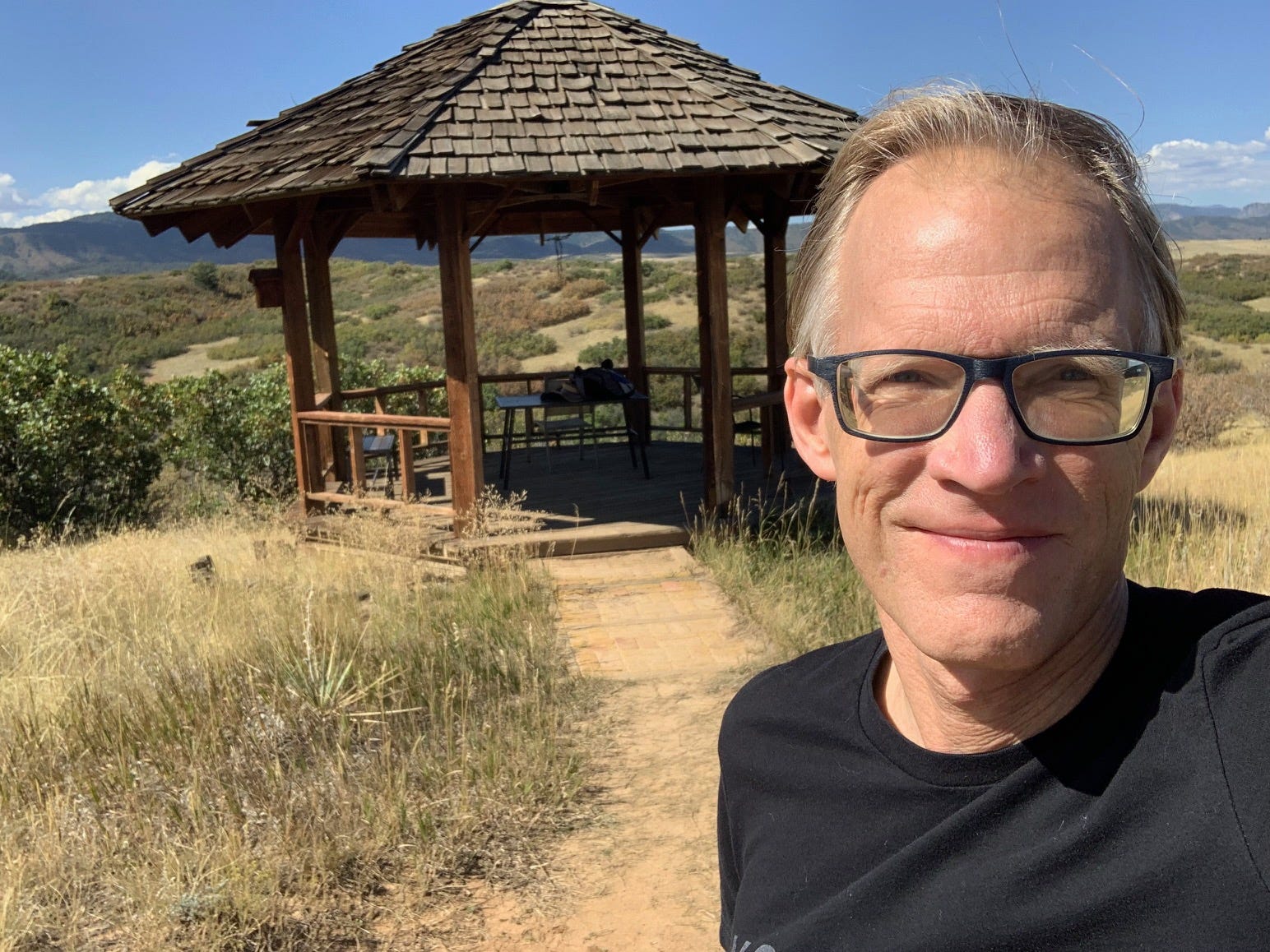
I just got back from a two-day retreat at one of my favorite places in the world, Sacred Heart Jesuit Retreat House in Sedalia, Colorado. It’s a place where silence pervades every space. People nod quietly to each other as they pass in the hallways. They sit noiselessly in the great room around the fireplace. And even in the dining room you hear the clink of silverware but no conversation.
You would think a place like this would be removed from the normal threats of this world, shielded in some kind of bubble of tranquility. But as I sat for a while in the gazebo on the property that looks out at the foothills, I found myself drawn to the reality that this retreat center, like every other building and person on this planet, is surrounded by an environment.
The hidden danger
As I looked around me, I could see flecks of gold and red on the hillsides, which were mostly covered in scrub oak. The leaves bore the marks of cold night air already felt now in the middle of September.
On this day, though, it was hot, 81 degrees. The heat caused me to remember the sign I’d passed as I drove up to the retreat center that morning. It was a fire warning sign with the arm pointing into the red, most-extreme-danger area. To make the point louder, an LED traffic sign flashed a fire ban warning.
Now, after walking through the baking sun, I thought of this scrub oak not only as pristine plants to gaze on in front of the blue foothills, but also as fuel for a wildfire. I imagined a blaze that could roar through this valley, up the ridge, and light the big trees around the retreat center into torches, and maybe even consume the buildings themselves.
That’s the way climate change is, I thought. It’s invisible. It’s so subtle that it seems insignificant. But then suddenly those little changes can create tremendous harm for humans.
An unusual beach
This summer, our family went out to Orlando for a volleyball tournament, and we stayed for a couple of days of vacation. On the second day, we headed to Clearwater, on the Gulf coast of Florida, to play at the beach. It was a hot day on the sand, but what really surprised me was the temperature of the water. It was so warm that it almost didn’t feel cool anymore. I’d never experienced ocean waves giving me a lukewarm slap.
During the summer, I read a report that said there hadn’t been any more hurricanes in the Caribbean and Gulf area than normal, in spite of the higher than normal water temperatures.
But then two days before my retreat, tropical storm Helene formed and rapidly strengthened to a category 4 hurricane measuring 420 miles across, one of the largest in recorded history. Although Helene didn’t make landfall on the beach where I swam this summer it was so large that the storm surge did tremendous damage even in Clearwater. Some homes were flooded. According to an article I read, the rapid intensification of the storm and the enormous amount of rain it carried were both effects of global warming. As of today, more than 130 people have died and many are still missing.
On cool days, on calm days, it’s sometimes hard to maintain a concern for what’s happening with the buildup of greenhouse gasses in the atmosphere. But these subtle changes can be deadly, even in the most peaceful places on earth.